
I was on the market for a weather station a few weeks ago. You know, those devices you install, forget, and feed a more or less tasty display with information to decide if you will pick your umbrella to go out. It is a modern spin on the good old barometer-thermometer combo for older readers.

Without getting into too many details, I picked the Tempest Weather System by WeatherFlow Tempest Inc. (here). The small size and the number of sensors it packs made me choose this one. I appreciate that none uses moving parts, and the entire system can run using the batteries charged by the integrated solar panels. In particular, the anemometer uses ultrasound sensors (no spinning cups), the rain sensor is haptic (no bucket to fill and empty – I would recommend getting the bird deterrent to avoid measuring birds and their food reliefs), and it doesn’t have an – ugly and cheap looking – display per se 😊. Instead, I am using an old iPad to run the Tempest app. To conclude the benefits list, let’s add the unavoidable AI and the crowd-sourcing of the data among all the Tempest users, for a better weather forecast.


This is what I want to share with you today. I am always pleased and amazed when systems are used unintendedly to generate data, insights, and knowledge. For example, when I used to travel using highspeed trains in Europe while listening to my radio, the signal quality changed when the train passed various obstacles, such as cows, mounts, obviously tunnels, etc. Using the signal strength and its variation, you can build a representation of your surrenders. Similarly, you can send cheap reconnaissance drone swarms to find the enemy on a hypothetical battlefield. Sure, the sensors’ data is primordial, but what speaks loudly are the missing drones. Looking at their last known position is a good idea.
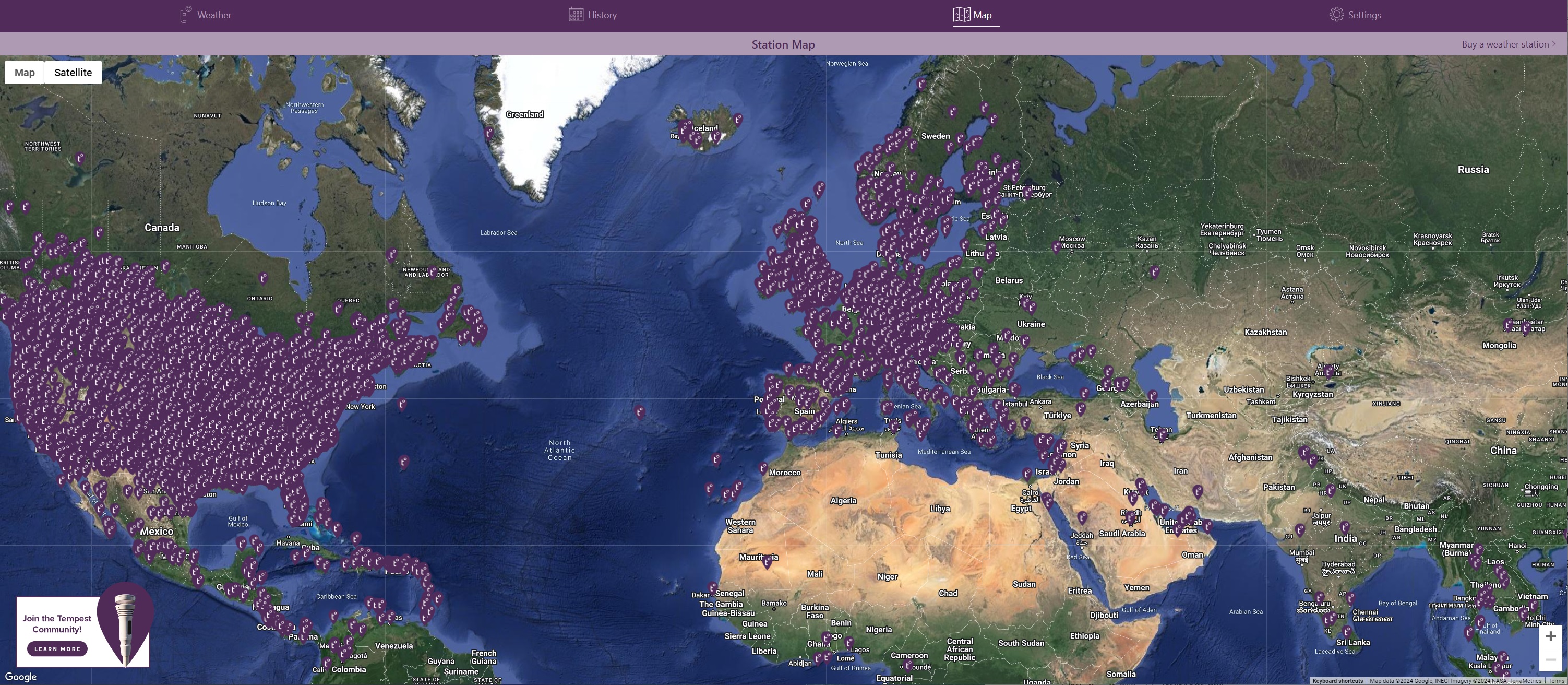
Following the same approach, when on April 8th, 2024, many watched the total solar eclipse in North America using their telescope, protective gear, etc.; you could use the Tempest array to track the eclipse indirectly by monitoring the ground temperature fluctuation caused by the cast shadow. Brilliant!
I’m just an old fashioned 77 year old. I just say “Hey Google, weather” and learn all I need 🙂 Even my new phone responds, through my hearing aids.